
Wicked Weeds
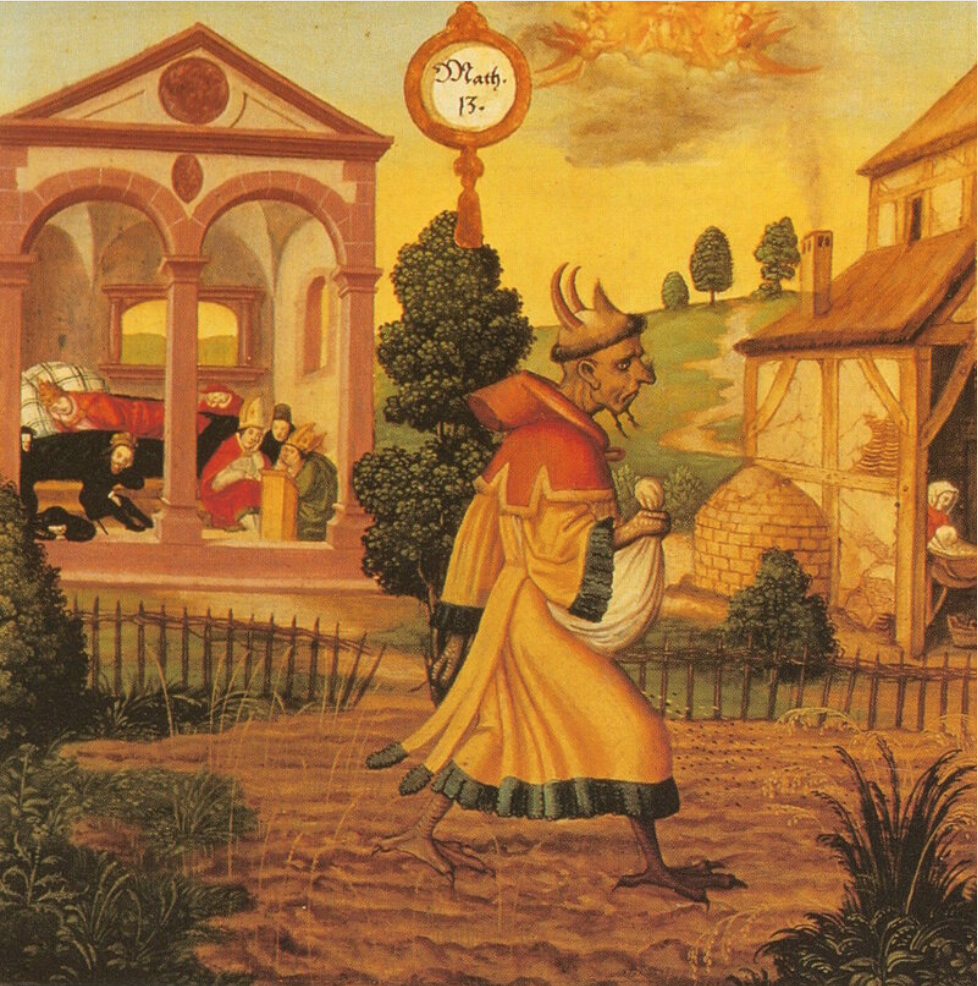
In the Gospel of Matthew, chapter 13, Jesus tells the parable of the wheat and the weeds. In the parable, the Kingdom of Heaven is compared to a man who sowed good seed in his field, but while the man slept, an enemy contaminated the field with weeds. When the servants discovered the weeds growing, they asked to tear them out, but to preserve the wheat now entangled with weeds, the man insisted that both good and bad grow together until the harvest, when the weeds will be separated away from the wheat and burnt.
At its heart, the parable describes the state of the world. God’s goodness and the devil’s corruption walk the same streets, share the same homes and even reside in the same hearts. Though evil exists in the world, God will be the ultimate victor, and all wickedness will be cast away.
The parable is fertile ground for deep thinking. One interesting detail is the nature of the weed and what it implies about evil. The weeds in the parable were known as tares, now called “darnel” (Lolium temulentum). The Latin name for this species, “temulentum,” means “drunk,” because those who consumed darnel often became nauseated, dizzy, developed headaches and experiences problems with their vision. These adverse effects were diligently recorded by the ancient Greeks, while the Romans used the phrase “lolio victitare,” “to live on darnel,” as an insult to describe a dim or short-sighted person. Were the Israelites of Jesus’ day aware of this plant’s toxic nature? Almost certainly.
Insidiously, darnel appears all but identical to wheat except for differences in height, floral structures and seeds, things only noticed later in growth. The unpleasant and sometimes lethal effects of darnel were good incentive for farmers to remove this wheat mimic from their fields. It is also the reason why the plant is sometimes called “poison darnel.” Darnel, however, is not toxic on its own. Its unsavory nature comes from a mutualistic relationship formed with a fungus. The fungus, in the genus Epicholë, grows inside the plant and is closely associated with the seed, allowing it to pass from one generation to the next. The fungus derives important nutrients from the plant, and in return the plant gets pumped full of a cocktail of toxic, fungal alkaloids that ward off insects and other herbivores.
There is much to ponder here. The darnel looks almost exactly like wheat except that the “fruit” it bears intoxicates rather than nourishes. Darnel can exist fine on its own, but has adapted to live in a constant relationship with a fungus that heightens the plant’s fitness by flooding its tissues with toxins. Wheat, though a grass like darnel, does not naturally form relationships with Epichloë fungi, seeing them as invaders and pathogens rather than teammates. It makes you think. At the end of the day, the nature of good and evil is all about relationship. Who are you growing with?
Brian Rutter, PhD, is the cofounder of Hundredfold Video and plant biologist working for 2Blades at the University of Minnesota. Subscribe to our newsletter to receive our “Sower Stories – Odd Facts About Plants” and video production tips in your inbox every month!
Works Cited:
BibleTools.org. “Lolio Victitare.” Accessed March 30, 2026. https://www.bibletools.org/index.cfm/fuseaction/Topical.show/RTD/cgg/ID/9351/Lolio-Victitare.htm
Cousland, J. R. C. "Toxic tares: The poisonous weeds (ζιζάνια) in Matthew's Parable of the Tares (Matthew 13.24–30, 36–43)." New Testament Studies 61, no. 3 (2015): 395-410.
Simpson, Wayne R., Hisashi Tsujimoto, David E. Hume, and Richard D. Johnson. "Alien chromatin from Hordeeae grasses enhances the compatibility of Epichloë endophyte symbiosis with the hexaploid wheat Triticum aestivum." Journal of Fungi 10, no. 6 (2024): 384.
Thomas, Howard, Jayne Elisabeth Archer, and Richard Marggraf Turley. "Remembering darnel, a forgotten plant of literary, religious, and evolutionary significance." Journal of Ethnobiology 36, no. 1 (2016): 29-44.